
Posts

The Other Son

The_Other_Son

The parable of the prodigal son contains so many practical lessons on relationships (particularly for parents) that we often forget Jesus spoke this parable in response to an accusation from the Pharisees; “This man welcomes sinners and eats with them” (Luke 15:2). The message of the prodigal son is really about our Heavenly Father who rejoices every time a “sinner” turns their heart to Him in repentance. But why did Jesus talk about TWO sons? What was the message of the son who remained at home?

He was the son who quietly watched his younger brother make disrespectful demands on his father; “Give me my share of the estate” (Luke 15:12). He was the son who stayed at home to work the fields while his brother “squandered his wealth in wild living” (Luke 15:13). And he was the son who became angry with his father and refused to celebrate his brother’s return: “All these years I’ve been slaving for you and never disobeyed your orders. Yet you never gave me even a young goat” (Luke 15:29).

This was the son who walked the straight and narrow – walked the path of disciplined obedience – but he missed his opportunity to receive true blessings as he walked.

Luke 15:31
“‘My son,’ the father said, ‘you are always with me, and everything I have is yours.'”

The son had been “slaving” in the hope of a future blessing, but his heart was not joyfully serving. He missed the real blessing of walking with his father and having free access to everything his father owned.

As believers in the saving grace of Jesus Christ, we understand that people can be saved at any point in their life – regardless of past sins. The thief on the cross received his Salvation only moments before he died. But there is always part of us that cries “foul!” Somehow it doesn’t seem fair when others have worked so hard for so long.

This attitude shows we also have missed the blessing of walking with our Lord. Heaven is never a reward for “obedient” living; it is a free gift to those who believe in Jesus. We should never feel we are “slaving” under the burden of His commands in order to earn His favor. Rather, we are to joyfully follow because we know that only in Him, only walking with Him in a loving relationship, is there true peace, true contentment…true blessings!

Let’s follow our Lord with a firm perspective of eternity, but let’s never become so focused on the future that we miss the blessings given to us today – the blessings of the journey! Let’s renew our joy at being allowed to walk every day with our Heavenly Father and rejoice whenever a repentant heart returns home. Let’s never make the sad mistake of living the burdened life of the other son.

Have a Christ Centered Day!

Steve Troxel
God’s Daily Word Ministries

**** Reading Plan ****

Oct 30 Lamentations 2:20-3:66; Hebrews 1:1-14; Psalm 102:1-28; Proverbs 26:21-22

*****************************************************

DonateNow

El Otro Hijo

The_Other_Son

La Parábola del hijo pródigo contiene muchas lecciones prácticas en cuanto a relaciones (particularmente para los padres) que a menudo olvidamos que Jesús les dió esta parábola en respuesta a las acusaciones de los Fariseos; “Este hombre recibe a los pecadores y come con ellos” (Lucas 15:2). El mensaje del hijo pródigo es realmente acerca de nuestro Padre Celestial quien se regocija cada vez que un “pecador” vuelve su corazón a El en arrepentimiento. ¿Pero porqué Jesús habla acerca de DOS hijos? Cual fue el mensaje del hijo que permaneció en la casa?

El fue el hijo que calladamente vio a su hermano menor hacer demandas irrespetuosas a su padre; “Dame la parte de los bienes que me corresponde” (Lucas 15:12). El fue el hijo quien se quedó en la casa para trabajar los campos mientras su hermano “desperdició sus bienes viviendo perdidamente” (Lucas 15:13). Y el fue el hijo que se enojó con su padre y rechazó celebrar el regreso de su hermano: “He aquí tantos años te he servido, no habiéndote desobedecido jamás y nunca me has dado ni un cabrito para gozarme con mis amigos” (Lucas 15:29).

Este fue el hijo que siempre anduvo recto y fiel – caminó en obediencia – pero perdió la oportunidad de recibir bendiciones verdaderas en su caminar.

Lucas 15:31
“Hijo mío –le dijo su padre–, tú siempre estás conmigo, y todo lo que tengo es tuyo.”

El hijo estuvo “esclavizandose” con la esperanza que recibiría alguna bendición futura, pero su corazón no estaba sirviendo con alegría. El perdió la bendición verdadera de caminar día tras día con su padre y tener acceso libre de todo los bienes de su padre.

Como creyentes en la gracia salvadora de Jesucristo, entendemos que personas pueden ser salvadas en cualquier punto de su vida – sin tomar en cuenta sus pecados del pasado. El ladrón en la cruz recibió su salvación solo momentos antes de morir. Pero siempre hay un parte de nosotros que grita “injusto!” De alguna forma no nos parece justo cuando alguien ha trabajado tan duro por tanto tiempo.

Esta actitud muestra que también hemos perdido la bendición de caminar con nuestro Señor. Eternidad en el Cielo no es un premio por haber vivido en obediencia; es un regalo para aquellos que creen en Jesús. Nunca debemos sentirnos como “esclavos” bajo la carga de Sus mandamientos. Al contrario, tenemos que seguirle con alegría y obediencia porque sabemos que solamente en El se encuentra la paz verdadera, satisfacción verdadera…bendiciones verdaderas!

Sigamos a nuestro Señor con una perspectiva firme de la eternidad; pero nunca enfoquemos tanto en el futuro que perdamos las bendiciones que nos están dando hoy – las bendiciones del viaje! Renovemos nuestro gozo ahora de que se nos ha permitido caminar cada día a la par de nuestro Padre Celestial y regocijémonos cuando un corazón arrepentido vuelve a casa. Nunca cometamos el triste error de vivir la vida cargada del otro hijo.

Tenga un Dia Centrado en Cristo!

Steve Troxel
Ministerios La Palabra Diaria de Dios

DonateNow

A Long Way Off

A_Long_Way_Off

In the last two messages, we have considered the parable of the prodigal son. We’ve seen how we must often “Love Enough to Let Go” and trust that God will continue to work in the life of a prodigal even as they walk through “Their Field of Pigs.”

As the son was longing to eat the pig food, he decided to return home and began to rehearse what he would say; “I will set out and go back to my father and say to him: Father, I have sinned against heaven and against you. I am no longer worthy to be called your son” (Luke 15:18-19).

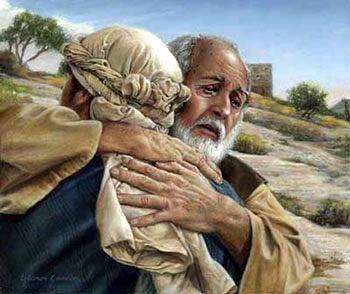
The son returned home. But before he could give his speech, before he could tell his father about eating with the pigs…before he could “prove” his repentance or say ANYTHING, the father received him with joy.

Luke 15:20
“But while he was still a long way off, his father saw him and was filled with compassion for him; he ran to his son, threw his arms around him and kissed him.”

When the father saw his son had returned, he was overjoyed and wanted to celebrate: “Bring the fatted calf…for this son of mine was dead and is alive again; he was lost and is found” (Luke 15:23,24). This type of love and joy cannot be manufactured for a one-time event. It must be established in the relationship long before there is trouble, and maintained even when all else is falling apart.

The scripture isn’t clear about what turmoil occurred when the prodigal son left home. We’re never told of the father’s pain – but I assure you it was there. It’s not clear how long the son was away – but I KNOW the father spent many anxious moments worrying about his son. And yet, when the son returned, there was joy and forgiveness. Without condoning the poor choices the son had made, the father received the son and loved him without reservation.

In many ways, we are the prodigal son who has walked away. But when we turn to our Heavenly Father in faith, He accepts us without requiring that we earn His love or demonstrate our worth. We may have drifted far and are unsure how to find our way back into His loving arms, but when we turn and seek Him, we find He is right there ready to receive us Home.

Jesus Christ submitted to a horrible death in order to provide a path of restoration. We who have been restored are now called to restore with others in this same manner; “Forgive as the Lord forgave you” (Colossians 3:13). We are called to be a catalyst of restoration, not a hedge of thorns which must be vaulted over. When a prodigal begins to return, let’s believe the best, be filled with compassion, and receive them back with true forgiveness and joy…even while they are a long way off.

Have a Christ Centered Day!

Steve Troxel
God’s Daily Word Ministries

**** Reading Plan ****

Oct 26 Jeremiah 49:23-50:46; Titus 1:1-16; Psalm 97:1-98:9; Proverbs 26:13-16
Oct 27 Jeremiah 51:1-53; Titus 2:1-15; Psalm 99:1-9; Proverbs 26:17
Oct 28 Jeremiah 51:54-52:34; Titus 3:1-15; Psalm 100:1-5; Proverbs 26:18-19
Oct 29 Lamentations 1:1-2:19; Philemon 1:1-25; Psalm 101:1-8; Proverbs 26:20

*****************************************************
DonateNow

Mientras Estén Lejos

A_Long_Way_Off

En los últimos dos mensajes, hemos considerado la parábola del hijo pródigo. Hemos visto como con frecuencia debemos “Amar tanto como para dejar ir” y confiar que Dios va a continuar la obra que ha comenzado en nuestros hijos pródigos aún cuando estén atravesando por su propio “Campo de Cerdos”.

Mientras el hijo pródigo estaba deseando comer la comida de los cerdos, el decidió regresar a casa y comenzar a practicar lo que diría; “Me levantare iré a mi padre, y le diré Padre, he pecado contra el cielo y contra ti. Ya no soy digno de ser llamado tu hijo; hazme como a uno de tus jornaleros” (Lucas 15:18-19).

El hijo regresó a casa. Pero antes que el pudiera dar su discurso; antes que pudiera contarle a su padre sobre comer con los cerdos; antes que pudiera probar su arrepentimiento o decir NADA, su padre le recibió con regocijo.

Lucas 15:20
“Y cuando aún estaba lejos, lo vio su padre, y fue movido a misericordia, y corrió, y se echó sobre su cuello, y le besó.”

Cuando el padre vio que su hijo había regresado, se sentía jubiloso y quería celebrar: “Y traed el becerro gordo…porque este mi hijo muerto era, y ha revivido; se había perdido, y es hallado” (Lucas 15:23,24). Este tipo de amor y gozo no puede ser preparado para una ocasión, debe ser construido en la relación mucho antes que se presente un problema – y mantenido aún cuando todo lo demás se esta derrumbando.

La escritura no es clara acerca del tumulto que se creó en la casa cuando el hijo pródigo dejó la casa. No se nos ha dicho nada sobre el dolor del padre, pero les aseguro que el dolor estaba allí. No está claro por cuanto tiempo el hijo estuvo lejos pero YO SE que el padre paso muchos momentos de ansiedad preocupado por su hijo. Y aún así cuando su hijo regresó, había gozo y perdón. Sin condonar las pobres decisiones que su hijo tomó, el padre recibió al hijo y lo amó sin reserva.

Cuando nos volvemos en fe a nuestro Padre Celestial, El nos acepta sin requerir que merezcamos su amor o demostremos que valemos la pena. Quizá nos hemos alejado de El y no estamos seguros de como regresar a Sus brazos amorosos; pero cuando regresamos y Lo buscamos, encontramos que EL está ahí listo para recibirnos en casa.

Jesucristo se sometió a una muerte horrorosa con el propósito de proveernos un camino de restauración. Nosotros quien hemos sido restaurados ahora somos llamados a restaurar a otros de la misma manera; “De la manera que Cristo os perdonó, así también hacedlo vosotros” (Colosenses 3:13). Somos llamados a ser catalizadores de restauración, no una barrera de espinas que tiene que ser saltada. Cuando nuestro pródigo empiece a regresar, esperemos lo mejor, sea lleno de compasión, y recibanlos con verdadero perdón y gozo – aún mientras estén lejos.

Tenga un Dia Centrado en Cristo!

Steve Troxel
Ministerios La Palabra Diaria de Dios

DonateNow

Love Enough To Let Go

Love_Enough_To_Let_Go

In the message “Their Field of Pigs” we considered the parable of the prodigal son and were encouraged to remember that God will use every tool available (even pigs) to draw His children Home. Our highest desire for those who are lost must be to see them secure in the arms of God. Notice that in this parable there is no mention of the father between the time the son left and when he returned home. The father appears to have watched his son leave and then simply waited for his return.

But the father must have known of his son’s condition while away; “this son of mine was dead and is alive again” (Luke 15:24). There must have been many reports of the son’s activities which were openly discussed with the rest of the family: “The older brother became angry…’this son of yours who has squandered your property with prostitutes comes home'” (Luke 15:28,30). And yet, while the son was away, the father never once stepped in to “rescue” him.

Was the father lazy and uncaring? Was this simply the product of a macho culture that didn’t show much emotion? Or rather, was this a father who truly knew how God’s grace could work a difficult situation toward a wonderful good?

James 1:2-4
“Consider it pure joy, my brothers, whenever you face trials of many kinds, because you know that the testing of your faith develops perseverance. Perseverance must finish its work so that you may be mature and complete, not lacking anything.”

We often reference this passage during times of personal trial. These verses encourage us to understand that God will make use of our difficult times. We are encouraged to trust God so fully that we actually rejoice because we know He will use our trials to make us complete.

Many of us understand and at least try to apply these verses in our own life. But it’s an additional step of faith (a very big step) to trust and apply these verses in the life of others – especially those we dearly love. If we are to rejoice in our own trials because of the good being worked within us, there is also a sense in which we should rejoice in the trials of others.

As painful as it must have been, the father stayed away and allowed God to complete His work – even though it meant his son would actually long to eat with the pigs! And yes, this father loved his son.

When someone we love goes astray, let’s continue to lift them up in prayer; always let them know they are loved and continually speak a gentle message of truth. Let’s NEVER give up hope, but let’s allow God to finish the glorious work He’s begun. Let’s trust Him above ALL else and love enough to let go.

Have a Christ Centered Day!

Steve Troxel
God’s Daily Word Ministries

**** Reading Plan ****

Oct 25 Jeremiah 48:1-49:22; 2 Timothy 4:1-22; Psalm 95:1-96:13; Proverbs 26:9-12

*****************************************************

DonateNow

Amar Suficiente Para Dejarlos Ir

Love_Enough_To_Let_Go

En el mensaje “Su Campo de Cerdos” consideramos la parábola del hijo pródigo y fuimos animados a recordar que Dios va a usar cada herramienta disponible (aún cerdos) para llevar a Sus hijos a casa. Debe de ser nuestro deseo más grande para nuestros hijos, verlos seguros en los brazos de Dios. Note que en esta parábola no hace mención acerca del padre entre el tiempo que el hijo se fué y el tiempo en que regresó a casa. Parece que el padre vió su hijo irse y luego simplemente esperó por su retorno.

El padre debió saber de la condición de su hijo mientras estaba lejos; “Porque este hijo mio estaba muerto, pero ahora ha vuelto a la vida” (Lucas 15:24). Debieron haber muchos reportes sobre la condición del hijo pródigo durante ese tiempo y estos debieron ser abiertamente discutidos con el resto de la familia: “Indignado, el hermano mayor se negó entrar…’ pero ahora llega ese hijo tuyo, que ha despilfarrado tu fortuna con prostitutas” (Lucas 15:28,30). Y aún mientras el hijo estaba lejos, el padre jamás dió un solo paso para “rescatarlo.”

¿Era el padre haragán y descuidado? ¿Era esto simplemente el producto de una cultura de machos que no mostraba mucha emoción? ¿O era este padre uno que sabía cómo la gracia de Dios puede trabajar una situación difícil para lograr maravillosas bondades?

Santiago 1:2-4
“Hermanos míos, tened por sumo gozo cuando os hallan en diversas pruebas, sabiendo que la prueba de vuestra fe produce paciencia. Mas tenga la paciencia su obra completa, para que seámos perfectos y cabales, sin que os falte cosa alguna.”

Frecuentemente hacemos referencia de este pasaje en tiempos de prueba personal. Estos versículos nos animan a entender el propósito de nuestros tiempos difíciles y a creer en Dios tanto que realmente nos regocijamos porque sabemos que El está usando nuestras pruebas para mejorarnos.

Muchos de nosotros entendemos y al menos intentamos aplicar estos versículos en nuestra propia vida. Pero es un paso adicional de fe (un gran paso) aplicar estos versículos en la vida de otros – especialmente cuando se trata de nuestros seres queridos. Si nos regocijamos en nuestras propias pruebas por lo bueno que se esta moldeando dentro de nosotros, hay también un sentido por el cual debemos regocijarnos por las pruebas de otros.

Tan doloroso como tenía que haber sido, el padre permitió que Dios cumpliera Su trabajo – aun cuando significaba que su hijo anhelaría comer con los cerdos! Y si, este padre amó a su hijo.

Cuando alguién que amamos se desvía, continuemos leventandolo en oración; siempre dejemosles saber que son amados y continuamente hablemos un suave mensaje de verdad. NUNCA perdamos la esperanza, pero permitamosle a Dios terminar la gloriosa obra que comenzó. Confiemos en El sobre TODO y amemos lo suficiente para dejarlos ir.

Tenga un Dia Centrado en Cristo!

Steve Troxel
Ministerios La Palabra Diaria de Dios

DonateNow

Their Field of Pigs

Their_Field_of_Pigs

The parable of the prodigal son has had special meaning to our family over the years. We have witnessed nearly every aspect of this parable work itself out through the life of our eldest daughter, from the pain of her rebellion to the joy of her return. Many of you journeyed through this parable with us and held us up in prayer for many years. This is a common issue faced by parents all over the world; no matter what country or culture, parents agonize over the one who has gone astray.

In this parable, we see a rebellious young man demanding what he felt was rightfully his: “Father, give me my share of the estate” (Luke 15:12). This disrespectful attitude grew until the son no longer desired to live under his father’s roof. He “got together all he had, set off for a distant country and there squandered his wealth in wild living” (Luke 15:13).

The reason this is such a universally common issue is that we are all born with the same sinful nature – a nature which holds us in tight control unless we are utterly transformed by the Spirit of God through faith in Jesus; “Those who live according to the sinful nature have their minds set on what that nature desires” (Romans 8:5). At the heart of the sinful nature is a pride which continually demands what we believe we deserve – this is the root of all sin!

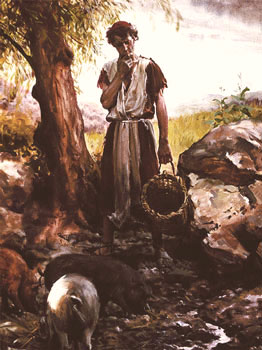
The prodigal son continued to live according to his sinful nature until he found himself in a field of pigs; “he longed to fill his stomach with the pods {the pigs} were eating” (Luke 15:16). But God used this terrible situation to soften the heart of the prodigal son and bring him to a state of submitted repentance.

Luke 15:17-18
“When he came to his senses, he said, ‘How many of my father’s hired men have food to spare, and here I am starving to death! I will set out and go back to my father and say to him: Father, I have sinned against heaven and against you.'”

Before the son left home, I’m sure the father tried to provide wise counsel about the true priorities in life. I’m sure the father desperately tried every possible method of guiding the son along the straight and narrow path. I’m also pretty sure the father simply held his son close and wept. Unfortunately, the lessons the son needed to learn could only be taught through pigs.

There is nothing more painful than to watch someone you love walk down a path of obvious pain; nothing rips the heart like watching your child walk away from God and engage in various forms of “wild living.” But it helps to remember that God loves the prodigal more than we can hope or imagine. He desires to live with them in an eternally restored relationship. Our Heavenly Father will never miss an opportunity to teach the prodigal and draw them near – even as they may drift and sink – even as they may wallow in their field of pigs.

Have a Christ Centered Day!

Steve Troxel
God’s Daily Word Ministries

**** Reading Plan ****

Oct 24 Jeremiah 44:24-47:7; 2 Timothy 2:22-3:17; Psalm 94:1-23; Proverbs 26:6-8

*****************************************************
DonateNow

Su Campo de Cerdos

Their_Field_of_Pigs

La parábola del hijo prodigo ha tenido un significado especial para nuestra familia en los últimos años. Hemos sido testigos casi de todos los aspectos de esta parábola cumplirse a través de la vida de nuestra hija, desde el dolor de su rebeldía hasta el gozo de su retorno. También he visto esto como el más común de los problemas enfrentados por los padres en todas partes del mundo. No importa que país o cultura, los padres agonizan sobre aquel que se ha extraviado.

En esta parábola, vemos un joven rebelde demandando lo que el sentía que por derecho le pertenecía: “Padre dame lo que me toca de la herencia” (Lucas 15:12). Esta actitud irrespetuosa creció hasta que el hijo no quiso mas vivir bajo el techo de su padre. El “juntó todo lo que tenía y se fue a un país lejano; allí vivió desenfrenadamente y derrochó toda la herencia” (Lucas 15:13).

La razón por la cual este asunto es universalmente común, es porque todos nacemos con la misma naturaleza pecaminosa – una naturaleza que nos controla a menos que somos absolutamente transformados por el Espíritu de Dios por medio de la fe en Jesús; “Los que viven conforme a la naturaleza pecaminosa fijan la mente en los deseos de tal naturaleza” (Romanos 8:5). En el corazón de la naturaleza pecaminosa hay un orgullo que constantemente demanda lo que nosotros creemos que merecemos – esta es la raíz de todo pecado!

El hijo prodigo continuó viviendo de acuerdo a su naturaleza pecaminosa hasta que se encuentró a sí mismo en el campo de los cerdos; “hubiera querido llenarse el estomago con la comida que daban a los cerdos” (Lucas 15:16). Pero Dios utilizó esta terrible situación para suavizar el corazón de este hijo prodigo y traerlo a un estado de arrepentimiento y sumisión.

Lucas 15:17-18
“Y volviendo en sí dijo: !!Cuantos jornaleros en casa de mi padre tienen abundancia de pan, y yo aquí perezco de hambre! Me levantaré e iré a mi padre, y le diré Padre, he pecado contra el cielo y contra ti.”

Antes que el hijo se fuera de casa, estoy seguro que el padre trató de darle amplio consejo acerca de lo que es realmente prioridad en la vida. Estoy seguro que el padre desesperadamente trató todos los métodos posibles para guiar a su hijo a través del camino recto y angosto. Y también estoy casi seguro que el padre simplemente abrazó a su hijo y lloró. Desafortunadamente, la lección que el hijo necesitaba aprender solo podía ser enseñada a través de los cerdos.

No hay nada más doloroso que ver a alguien que tu amas caminar en ese camino de un obvio dolor – nada rompe tanto el corazón como ver a tu hijo caminar separado de Dios e involucrarse en diferentes formas de “vida salvaje.” Pero ayuda recordar que Dios ama al hijo prodigo más de lo que nosotros podamos esperar o imaginar. El desea vivir con ellos en una relación restaurada eternamente. Nuestro Padre Celestial nunca perderá una oportunidad para enseñarles o atraerles a El – aún cuando se desvían y se hunden – aún cuando se están revolcando en su campo de cerdos.

Tenga un Dia Centrado en Cristo!

Steve Troxel
Ministerios La Palabra Diaria de Dios

DonateNow

Carry Us To Completion

Carry_Us_To_Completion

A great tragedy within the Christian faith is that many who believe they are on their way to Heaven will one day find they are sadly mistaken. They have been misled into believing that Church membership, being “good,” or working extra hard will ensure Salvation; but on the day of judgment they will be cast aside. This tragedy must be fought by speaking the truth about Salvation. We must teach of the need to trust in the saving grace offered through the sacrifice of Jesus for the forgiveness of sin. We must teach that faith in Jesus Christ – the Lord and Savior clearly presented in God’s Word – is the ONLY way!

A second tragedy is that many who have truly trusted in Jesus for the forgiveness of sin, and desire to love Him and serve Him with all their heart, will live their days full of doubt and fear. They are on their way to Heaven but doubt when they don’t feel good enough to deserve such a gift, and they fear a Holy God who couldn’t possibly save one so unworthy. As they draw closer to the Light, their failures are revealed and they become discouraged or try to work harder to please God and gain His acceptance. We must also fight this tragedy by speaking the truth about Salvation.

The glorious truth is that none of us are good enough! “For all have sinned and fall short of the glory of God” (Romans 3:23). Without God’s grace, no one can ever hope to hit the mark of His perfect glory.

We don’t enter Heaven based on what we have done; rather, we are accepted based on the One in whom we have placed our faith; “For it is by grace you have been saved, through faith” (Ephesians 2:8). At the moment of Salvation, we become an eternal Child of God; “You are not your own; you were bought at a price” (1 Corinthians 6:19-20). We were purchased with His blood and have become a “new creation: the old has gone, the new has come” (2 Corinthians 5:17). But a new creation does not continue down the same path.

We are “born again” when the Spirit of God transforms our heart. And as a new creation, we will learn to crawl, then walk, and one day run! We may stumble, but God promises we will continue to grow; for it is His plan that ALL His children become “conformed to the likeness of His Son” (Romans 8:29)…and being conformed is a lifetime process!

Philippians 1:6
“Being confident of this, that He who began a good work in you will carry it on to completion until the day of Christ Jesus.”

God has given us His Holy Spirit and “sealed {us} for the day of redemption” (Ephesians 4:30). Let’s be confident in God’s promise. We must continue to draw closer and give Him more of our heart, but we must also remember that we are His and He WILL finish the work He began. Our Heavenly Father has saved us AND promised to carry us to completion.

Have a Christ Centered Day!

Steve Troxel
God’s Daily Word Ministries

**** Reading Plan ****

Oct 23 Jeremiah 42:1-44:23; 2 Timothy 2:1-21; Psalm 92:1-93:5; Proverbs 26:3-5

*****************************************************

DonateNow

Llevarnos Hasta la Perfección

Carry_Us_To_Completion

Una gran tragedia dentro de la fe Cristiana es que muchos de los que creen que están en el camino para el cielo van a darse cuenta un día que están tristemente equivocados. Ellos han sido mal informados y creen que una membresía de una iglesia, buenas obras o clases especiales les van a asegurar su salvación, pero ellos serán echados a un lado en el día del juicio. Esta tragedia debe de ser combatida hablando la verdad acerca de la Salvación. Tenemos que enseñar acerca de la necesidad de creer en la gracia salvadora ofrecida a través del sacrificio de Jesús para el perdón de los pecados. Tenemos que enseñar que fe en Jesucristo – El Señor y Salvador claramente presentado en la palabra de Dios – es la ÚNICA manera!

La segunda gran tragedia es que muchos de los que verdaderamente han creído en Jesús para el perdón de pecados, y han deseado amarlo y servirle con todo su corazón, vivirán sus días en la tierra llenos de duda y temor. Ellos están en su camino al cielo pero dudan cuando no se sienten “suficientemente buenos” para merecer tal regalo, y le temen a un Dios Santo que jamás pudiera salvar a tan vil pecador. De la manera que ellos se acercan a la Luz, sus fallas son reveladas y se desaniman o tratan de “trabajar” mas duro para complacer a Dios y ganar Su aceptación. Debemos también pelear esta tragedia hablando la verdad acerca de la salvación.

Pero la verdad gloriosa es que ninguno de nosotros es suficientemente bueno! “Por cuanto todos pecaron, y están destituidos de la gloria de Dios” (Romanos 3:23). Sin la gracia de Dios, nadie podría esperar pegarle al blanco de Su perfecta gloria.

Nosotros no entramos al cielo basados en lo que hemos hecho – solo en Quien hemos puesto nuestra fe; “Porque por gracia sois salvos por medio de la fe” (Efesios 2:8). En el momento de Salvación, nos transformamos en un hijo eterno de Dios: “No sois vuestros; Porque habéis sido comprados por precio” (1 Corintios 6:19-20). Fuimos comprados con la sangre de Jesús y nos hemos transformados en “nueva creación: las cosas viejas pasaron; he aquí todas son hechas nuevas” (2 Corintios 5:17). Una nueva creación no continua en el mismo camino viejo.

Nosotros hemos “nacido de nuevo” cuando el Espíritu de Dios transforma nuestro corazón; y como nueva creación, debemos de aprender a gatear, después caminar, y un día correr! Probablemente algunas veces tropeceremos, pero la promesa de Dios es que continuaremos creciendo; porque es Su plan que TODOS sus hijos lleguen a ser “conformes a la imagen de su Hijo” (Romanos 8:29)…y esa transformación es un proceso de por vida!

Filipenses 1:6
“Estando persuadido de esto, que el que comenzó en vosotros la buena obra, la perfeccionará hasta el día de Jesucristo.”

Dios nos dió Su Espíritu Santo y fuimos “sellados para el día de la redención” (Efesios 4:30). Estemos seguros de la promesa de Dios. Debemos continuar acercándonos y dandole más de nuestro corazón, pero también debemos recordar que somos de El y el VA a terminar el trabajo que comenzó. Nuestro Padre Celestial nos ha salvado Y prometió llevarnos hasta la perfección.

Tenga un Dia Centrado en Cristo!

Steve Troxel
Ministerios La Palabra Diaria de Dios

DonateNow

Looking At Our Heart

Looking_At_Our_Heart

After Joshua died, the nation of Israel was ruled by judges for over 300 years. During this time, the people turned to God when life became difficult, but “did evil in the eyes of the Lord” (Judges 3:7) when the difficult times passed. Finally, they cried out for a king: “We want a king to rule us. Then we will be like the other nations” (1 Samuel 8:20). God gave them exactly what they wanted; He gave them Saul, “An impressive young man without equal among the Israelites” (1 Samuel 9:2).

Saul looked impressive and was loved by the people, but he failed to obey God’s commands. After several years, God rejected Saul as king and sent Samuel to anoint a new king from among the sons of Jesse. When Samuel arrived at Jesse’s home, he saw Eliab and thought for sure he was to be the next king (Eliab was probably tall and strong like Saul).

1 Samuel 16:7
“But the Lord said to Samuel, ‘Do not consider his appearance or his height, for I have rejected him. The Lord does not look at the things man looks at. Man looks at the outward appearance, but the Lord looks at the heart.'”

Samuel assumed the next king would fit the same “impressive” mold as Saul. But this king was to be chosen according to the criteria of God, not the criteria of man. God chose David, not because of his appearance or status, but because of his heart.

How often do we fall into the trap of evaluating others based on outward appearance? How often do we draw conclusions about a person based on looks and status. These prejudices affect the relationships we pursue and the counsel we give as well as receive. But God calls us to consider the heart of others and to strongly examine the condition of our own heart!

Much of our life is focused on being externally impressive. We desire the “right” looks, credentials, and possessions. We believe our outward condition makes us more valued, and some people actually do evaluate us based on these outward coverings. But God looks past the external and directly pierces into who we are on the inside. Our focus must forever be on how we are viewed in the eyes of God, not the eyes of man.

There are very few things with eternal value. And nothing outside the will of God can survive the flames of judgment. The priorities of our life become the treasures which mold our heart; “Where your treasure is, there your heart will be also” (Matthew 6:21). And our heart is NEVER hidden from the eyes of God!

Let’s place our treasure firmly in the palm of His Hand. Let’s begin to consider the riches stored inside our Brothers and Sisters, and consider our true appearance as we stand before our holy Father. Everything external will one day fade away and we will stand bare and empty, with God looking at our heart.

Have a Christ Centered Day!

Steve Troxel
God’s Daily Word Ministries

**** Reading Plan ****

Oct 19 Jeremiah 33:1-34:22; 1 Timothy 4:1-16; Psalm 89:1-13; Proverbs 25:23-24
Oct 20 Jeremiah 35:1-36:32; 1 Timothy 5:1-25; Psalm 89:14-37; Proverbs 25:25-27
Oct 21 Jeremiah 37:1-38:28; 1 Timothy 6:1-21; Psalm 89:38-52; Proverbs 25:28
Oct 22 Jeremiah 39:1-41:18; 2 Timothy 1:1-18; Psalm 90:1-91:16; Proverbs 26:1-2

*****************************************************

DonateNow

Viendo a Nuestro Corazón

Looking_At_Our_Heart

Después de la muerte de Josué, la nación de Israel fue gobernada por jueces por mas de 300 años. Durante este tiempo, la gente se volvió a Dios cuando la vida se tornó difícil, pero “Hicieron, pues, los hijos de Israel lo malo ante los ojos de Jehová” (Jueces 3:7) cuando los tiempos difíciles pasaron. Finalmente, ellos clamaban por un rey: “y nosotros seremos también como todas las naciones, y nuestro rey nos gobernará” (1 Samuel 8:20). Dios les dió exactamente lo que querían – El les dió a Saúl: “joven y hermoso. Entre los hijos de Israel no había otro más hermoso que él” (1 Samuel 9:2).

Saúl se veía impresionante y era querido por la gente pero falló en obedecer los mandatos de Dios. Después de varios años, Dios rechazó a Saúl como rey y envió a Samuel a ungir a un nuevo rey de entre los hijos de Isaí. Cuando Samuel llegó a la casa de Isaí, vio a Eliab y pensó que seguramente el sería el próximo rey (Eliab era probablemente alto y fuerte como Saúl).

1 Samuel 16:7
“Y Jehová respondió a Samuel: No mires a su parecer, ni a lo grande de su estatura, porque yo lo desecho; porque Jehová no mira lo que mira el hombre; pues el hombre mira lo que está delante de sus ojos, pero Jehová mira el corazón.”

Samuel asumió que el próximo rey tendría el mismo aspecto impresionante de Saúl. Pero el rey sería elegido de acuerdo a los criterios de Dios, no por los criterios del hombre. Dios eligió a David, no por su apariencia y posición, sino por su corazón.

¿Con que frecuencia caemos en la trampa de evaluar a otros basados en la apariencia externa? Nos acercamos hacia la multitud “normal” y equivocadamente asumimos que, de alguna manera, las buenas apariencias y posición social producen sabiduría. Pero Dios nos llama a considerar el corazón de los demás y a considerar con seriedad la condición de nuestro corazón!

Mucho de nuestra vida está centrado en ser externamente impresionante. Deseamos tener la apariencia “correcta,” credenciales, y posesiones. Creemos que nuestra condición externa nos hará más aceptables, pero Dios ve más allá de lo externo y directamente penetra en lo que somos interiormente. Nuestro enfoque siempre debe estar en como somos vistos en los ojos de Dios, no en los ojos de los hombres.

Hay pocas cosas que tienen valor eterno. Y nada fuera de la voluntad de Dios puede sobrevivir las llamas del juicio. Las prioridades de nuestra vida son el tesoro que moldea nuestro corazón; “Porque donde esté vuestro tesoro, allí estará también vuestro corazón” (Mateo 6:21). Y nuestro corazón NUNCA está oculto de los ojos de Dios!

Guardemos con firmeza nuestro tesoro en las Manos de Dios. Comencemos a considerar las riquezas guardadas en nuestros Hermanos y Hermanas, y consideremos nuestra verdadera apariencia mientras nos mantenemos frente a nuestro Padre santo. Todo lo externo un día se desvanecerá y estaremos sin nada delante de Dios que estará viendo a nuestro corazón.

Tenga un Dia Centrado en Cristo!

Steve Troxel
Ministerios La Palabra Diaria de Dios

DonateNow